
Allergy Skin Test
Skin prick testing for nasal and sinus allergy when clinically indicated

Medically reviewed by a board-certified ENT specialist
- Author:
- Dr. Poj Pinyopornpanish — Otolaryngologist · Thai Board of Otolaryngology
- Medical reviewer:
- Dr. Poj Pinyopornpanish — Otolaryngologist · Thai Board of Otolaryngology
- Reviewed on:
- Last updated:
- Estimated reading time: 4 min
Overview
What is allergy skin testing?
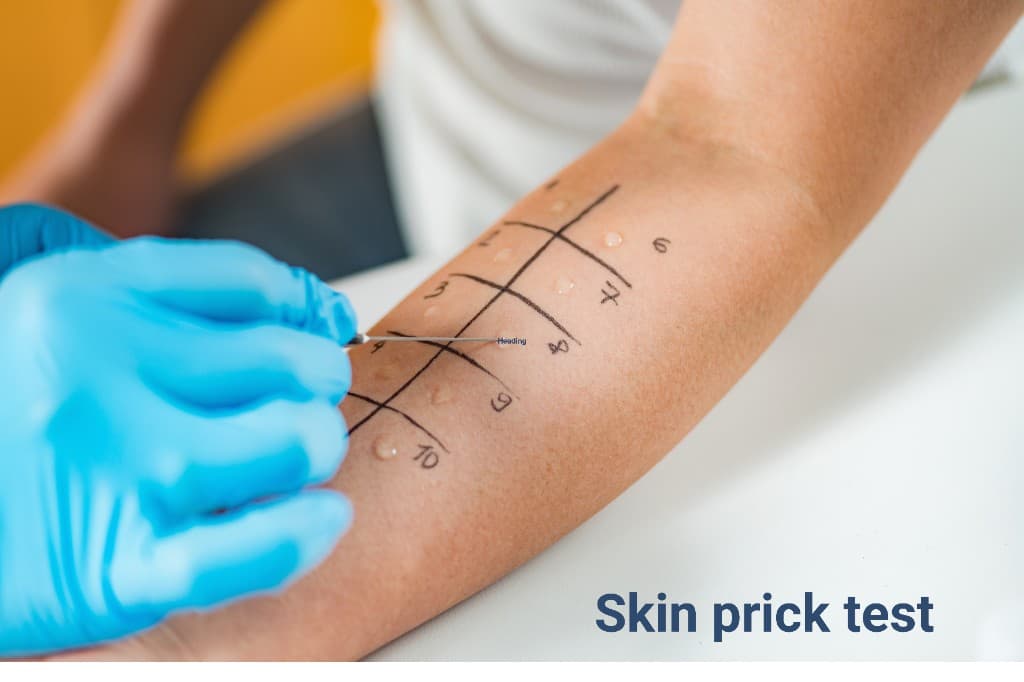
Skin prick testing (SPT) places small amounts of allergen on the skin and lightly pricks the surface. If you are sensitised, a small wheal and redness appear within 15–20 minutes.
The test helps identify allergens that may contribute to nasal congestion, sneezing, runny nose, or sinus symptoms. Results are interpreted together with your history and examination — not in isolation.
Not everyone with nasal symptoms needs SPT. Your doctor considers symptoms, duration, and appropriateness. Results guide trigger avoidance and treatment; avoiding allergens does not guarantee complete symptom resolution.
Symptoms
Symptoms that may suggest allergy
These symptoms may relate to nasal or sinus allergy. Testing may be considered when clinically indicated:
Chronic nasal congestion, sneezing, or runny nose
Itchy nose, itchy eyes, or watery eyes
Symptoms in specific settings (e.g. dust, pets, pollen)
Improvement when leaving certain environments
Recurrent sinusitis or persistent facial pressure
Mouth breathing or poor sleep from nasal blockage
Insufficient improvement with general medication alone
Possible causes
Allergens commonly tested
The allergen panel depends on history and symptoms — not every allergen is tested.
House dust mite
A common cause of perennial allergic rhinitis in many regions.
Pollen
Seasonal or location-specific symptoms depending on local plants.
Pet dander
Cats, dogs, or other pets — symptoms may occur with exposure or at home.
Mould and airborne fungi
May contribute to chronic nasal symptoms, especially in damp environments.
Other allergens
Your doctor selects panels based on history — such as insects or selected foods when relevant.
Non-allergic causes
Nasal congestion has other causes — such as structural problems, sinus disease, or medication. These are assessed before testing.
When to seek assessment
When to see an ENT specialist
Consider assessment if you have any of the following:
Chronic nasal congestion or sneezing affecting sleep or daily life
Suspected identifiable triggers such as dust, pets, or pollen
Symptoms not well controlled despite medication
You want a structured plan for trigger avoidance
Recurrent sinusitis with suspected allergic contribution
Your doctor has recommended allergy assessment before specific treatment
Diagnosis
How skin prick testing is done
Assessment begins with symptom history, triggers, medications, and ear, nose, and throat examination.
Before SPT, your doctor asks about antihistamines or other drugs that may affect results. Some medications need temporary withdrawal as advised.
During testing, allergens are placed on the forearm or back and lightly pricked. Results are read within 15–20 minutes. Your doctor explains positive findings in context. Not every positive result requires strict avoidance — this depends on symptom relevance and severity.
Treatment
Management after testing
SPT results guide care — they are not treatment by themselves.
Trigger avoidance
Reducing exposure to relevant allergens such as dust or pets, as practical and necessary.
Medication
Antihistamines, nasal sprays, or other medication may be recommended according to symptoms and results.
Nasal irrigation
Saline rinses may help reduce symptoms alongside other treatment.
Allergen immunotherapy
May be considered when indicated and initial treatment is insufficient, according to guidelines.
Follow-up
Symptoms and treatment response should be monitored. Your doctor adjusts the plan as appropriate.
Why RAJVITHI CLINIC
Why choose RAJVITHI CLINIC
Assessment of nasal and sinus allergy is part of otolaryngology (ENT) care.
Systematic nasal and sinus assessment by an ENT specialist
Skin prick testing when clinically indicated, with history and examination
Clear explanation of results and management in plain language
Evidence-based care without unnecessary testing
Coordination of allergy treatment or referral when required
FAQ
Questions patients often ask
Is skin prick testing painful?
You may feel mild discomfort like a small scratch — not a deep injection. Results are read in about 15–20 minutes.
Do I need to stop antihistamines before testing?
Some medications can affect results. Your doctor advises which drugs to stop and for how long before testing.
Can I be tested while I have symptoms?
Usually yes, but tell your doctor about current symptoms and medications. Suitability will be assessed.
Can children have skin prick testing?
Yes at certain ages when indicated. Your doctor assesses and explains to parents or caregivers.
What does a positive result mean?
It indicates sensitisation (IgE) to that allergen, but does not always mean severe clinical allergy. Your doctor interprets results with your symptoms.
Can food allergies be tested?
Selected foods may be included when relevant to symptoms. Food allergy diagnosis may require additional assessment beyond SPT alone.
Must I avoid everything that tests positive?
Not necessarily. Avoidance advice depends on the link to your symptoms and what is practical in daily life.
Do I need an appointment?
Yes. Appointments are recommended, including preparation advice about medications that may need to be stopped.
Where is RAJVITHI CLINIC?
1st Floor, MD Boutique Hotel, 18 Rajvithi Road, Chiang Mai
Is English consultation available?
Yes. The clinic sees international patients and English consultation is available.
References
Related guidelines and patient resources
The sources below are recognized international guidelines and patient-education resources for general learning. They are not individualized medical advice.
Allergic rhinitis clinical guidance
Allergic Rhinitis and its Impact on Asthma (ARIA)
View source (Allergic Rhinitis and its Impact on Asthma (ARIA))Upper airway allergy patient information
AAO-HNS / ENThealth
View source (AAO-HNS / ENThealth)Patient education and clinical guidance in otolaryngology
American Academy of Otolaryngology–Head and Neck Surgery (AAO-HNS)
View source (American Academy of Otolaryngology–Head and Neck Surgery (AAO-HNS))Public ENT health information
ENThealth (AAO-HNS Foundation)
View source (ENThealth (AAO-HNS Foundation))
Educational information
Medical Disclaimer
This information is intended for educational purposes only and does not replace diagnosis or treatment by a qualified physician. If you have concerning symptoms, please consult an ENT specialist.
Related links
Learn more
Related clinic pages to help you explore conditions, services, and procedures.
Interested in allergy skin testing?
Contact the clinic to book an appointment or ask preliminary questions. The doctor will assess whether testing is appropriate for you.