
Soft Palate Radiofrequency for Snoring
A minimally invasive, site-specific procedure for selected patients when soft-palate vibration is the main source of snoring. It is not a direct treatment for obstructive sleep apnea (OSA).

Medically reviewed by a board-certified ENT specialist
- Author:
- Dr. Poj Pinyopornpanish — Otolaryngologist · Thai Board of Otolaryngology
- Medical reviewer:
- Dr. Poj Pinyopornpanish — Otolaryngologist · Thai Board of Otolaryngology
- Reviewed on:
- Last updated:
- Estimated reading time: 7 min
Overview
What Soft Palate RF is, and how it relates to snoring
Soft palate radiofrequency (Soft Palate RF) applies radiofrequency energy to soft-palate tissue so it can later contract and firm. It is a minimally invasive, site-specific procedure — not a large palatal resection.
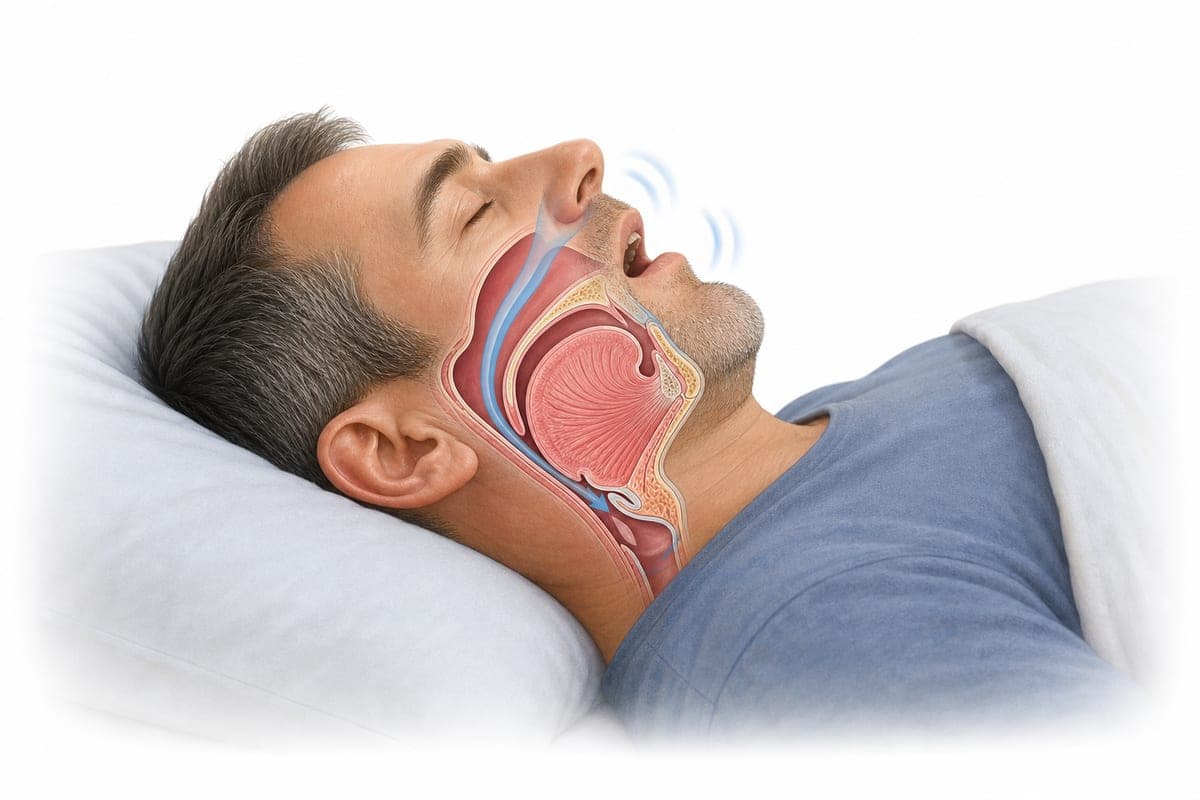
Snoring is produced when upper-airway tissues vibrate during sleep, and the soft palate and uvula can be one of the vibrating sites. When examination shows the soft palate to be the main vibrating site, reducing and tightening the tissue with radiofrequency may help lessen the vibration that contributes to snoring in suitable patients.
Important: reducing snoring and treating obstructive sleep apnea (OSA) are different clinical goals. Soft Palate RF does not guarantee that snoring will stop and is not a direct treatment for OSA. If OSA is suspected or confirmed, your doctor may advise a sleep study and consider other treatment such as CPAP before deciding.
Indications
When Soft Palate RF may be considered
Considered when examination shows the soft palate to be the main source of snoring vibration in selected patients — not for everyone who snores.
Chronic loud snoring associated with soft-palate and uvular vibration
Examination identifies the soft palate as the main site producing snoring
You want a minimally invasive option after medical assessment
No untreated moderate-to-severe OSA, or sleep assessment has been completed when indicated
You understand it is one option and that results vary between individuals
Patient selection
Who may be suitable
Suitability depends on the site and cause of obstruction or vibration — not on preference alone.
Soft palate is the main vibrating site
Suitable when examination shows the soft palate and uvula are the main vibrating site, not when the main problem is the nose or tongue base.
Multilevel airway assessed
With multilevel narrowing, several sites may need care together; Soft Palate RF alone may not be enough.
Distinguished from OSA that needs care
If OSA is suspected or confirmed — especially moderate-to-severe — a sleep study and CPAP or other treatment may be needed first.
No contraindication to the procedure
Your doctor assesses health history and safety first, such as pregnancy or specific conditions that may be unsuitable.
When to seek assessment
When to see an ENT specialist
See an ENT specialist to identify the cause and site of snoring before choosing treatment.
Regular loud snoring, or witnessed breathing pauses during sleep
Daytime sleepiness, unrefreshing sleep, or morning headaches
Interest in a minimally invasive option and whether you are suitable
You want a clear explanation of benefits, limitations, and risks before deciding
Previous OSA diagnosis or CPAP use with ongoing symptoms
Our clinic approach
Assessment and Treatment at Rajvithi ENT Clinic
At Rajvithi ENT Clinic, considering Soft Palate RF always begins with assessment. The ENT specialist takes a sleep and daytime symptom history and risk factors, including information from a bed partner when available, to understand the pattern and severity of symptoms.
The physician then examines the nose, mouth, soft palate, uvula, tonsils, and tongue base to evaluate the cause and site of snoring and to identify the main vibrating site. When indicated, flexible nasal and pharyngeal endoscopy may be used to assess the upper airway further.
If obstructive sleep apnea (OSA) is suspected, a sleep study (sleep study / Home Sleep Test) may be advised first, because reducing palatal vibration is not the same as treating OSA. Once the picture is complete, your doctor discusses the options with you (shared decision-making) and whether this procedure is appropriate — it is one option, not first-line treatment for everyone.
Treatment steps
A step-by-step overview of Soft Palate RF
The sequence below is a general overview for education. Some details may vary with the physician's individual assessment and treatment requirements.
Assessment and preparation
The physician confirms the indication from examination, explains the procedure, realistic expectations, and aftercare, and reviews individual safety and health history.
Local anaesthesia to the soft palate
The procedure is performed under local anaesthesia, using topical or spray anaesthesia together with local anaesthetic injection for comfort during the procedure.
Applying radiofrequency to the soft palate
Radiofrequency energy is applied to targeted points on the soft palate so the tissue can contract and firm over time. It is a minimally invasive, site-specific procedure — not a large palatal resection. The procedure typically takes approximately 30–60 minutes, depending on individual assessment and treatment requirements.
The early period afterward
Sore throat, swallowing discomfort, or a sense of tightness can occur early on; the degree and duration vary. The physician advises on aftercare and symptom relief as appropriate.
Recovery and follow-up
Tissue adapts gradually, so any effect on snoring is not immediate. Treatment generally begins with one session, followed by an assessment of the response to determine whether additional treatment is necessary. A follow-up appointment is generally scheduled within 1–2 weeks after the procedure to assess symptoms and recovery.
Comparison
How Soft Palate RF differs from Nasal RF
Both use radiofrequency energy, but at different sites and with different goals. Your doctor chooses based on where examination identifies the main problem.
Soft Palate RF treats the soft palate and uvula to reduce the tissue vibration that produces snoring.
Nasal RF (inferior turbinate radiofrequency reduction) treats the nasal turbinates to help relieve nasal obstruction — it is not a direct treatment for palatal snoring.
The choice depends on where examination identifies the main problem; some patients have multilevel issues that may need combined care.
Both are minimally invasive procedures for selected patients, and neither is a direct treatment for obstructive sleep apnea (OSA).
Service Fees & Appointments
Fees depend on the type of examination and treatment required. Please contact our clinic via LINE Official Account for further details.
Risks and limitations
What to understand before deciding
Soft Palate RF does not guarantee that snoring will stop and is not a direct treatment for OSA. Please understand the following before deciding.
As with any procedure, risks such as bleeding, infection, or variable tissue response are possible
It does not guarantee that snoring will stop; results vary between individuals
With multilevel narrowing or OSA, other treatment may be needed
It does not replace nasal care, weight management, or sleep-position changes when those remain part of the problem
Reducing snoring and treating OSA are different clinical goals
FAQ
Questions patients often ask
Will Soft Palate RF definitely cure snoring?
No. It cannot guarantee that snoring will stop. It may reduce soft-palate vibration that contributes to snoring in suitable patients, but results vary. With multilevel airway narrowing, other treatment may be needed alongside.
Can Soft Palate RF treat obstructive sleep apnea (OSA)?
No, it is not a direct treatment for OSA. Reducing palatal vibration is not the same as treating OSA. If OSA is suspected or confirmed, your doctor may advise a sleep study and consider other treatment such as CPAP first.
Who is suitable for this procedure?
Patients in whom examination shows the soft palate is the main vibrating site for snoring, after medical assessment. It is not for everyone who snores; the physician considers the obstruction site and cause individually.
What is assessed before the procedure?
The physician examines the nose, mouth, soft palate, uvula, tonsils, and tongue base to identify the main vibrating site, and may use endoscopy when indicated. If OSA is suspected, a sleep study may be advised first.
What happens afterward, and how long is recovery?
Sore throat, swallowing discomfort, or palate tightness can occur early on. Tissue adapts gradually, so any effect on snoring is not immediate. A follow-up appointment is generally scheduled within 1–2 weeks after the procedure to assess symptoms and recovery.
Will I need repeat treatment?
Treatment generally begins with one session, followed by an assessment of the response to determine whether additional treatment is necessary.
What are the risks?
As with any procedure, risks such as bleeding, infection, or variable tissue response are possible. The physician explains individual risks before you decide.
What anaesthesia is used, and how long does the procedure take?
The procedure is performed under local anaesthesia, using topical or spray anaesthesia together with local anaesthetic injection. It typically takes approximately 30–60 minutes, depending on individual assessment and treatment requirements. For cost, please contact the clinic for further details.
Do I need an appointment?
Appointments are recommended, especially if assessment or endoscopy is planned. Please bring prior sleep-study reports and a medication list if available.
References
Related guidelines and patient resources
The sources below are recognized international guidelines and patient-education resources for general learning. They are not individualized medical advice.
Procedure and preparation information for patients
AAO-HNS / ENThealth
View source (AAO-HNS / ENThealth)Patient education and clinical guidance in otolaryngology
American Academy of Otolaryngology–Head and Neck Surgery (AAO-HNS)
View source (American Academy of Otolaryngology–Head and Neck Surgery (AAO-HNS))Public ENT health information
ENThealth (AAO-HNS Foundation)
View source (ENThealth (AAO-HNS Foundation))
Educational information
Medical Disclaimer
This information is intended for educational purposes only and does not replace diagnosis or treatment by a qualified physician. If you have concerning symptoms, please consult an ENT specialist.
Related links
Learn more
Related clinic pages to help you explore conditions, services, and procedures.
Interested in soft palate radiofrequency assessment?
Contact the clinic to book an appointment or ask preliminary questions. The doctor will assess whether this procedure is appropriate for you.