
Precision energy delivery
Controlled energy directed to planned treatment targets.
Modern minimally invasive technology for selected ear, nose and throat procedures performed by an ENT specialist.

Medically reviewed by a board-certified ENT specialist
Overview
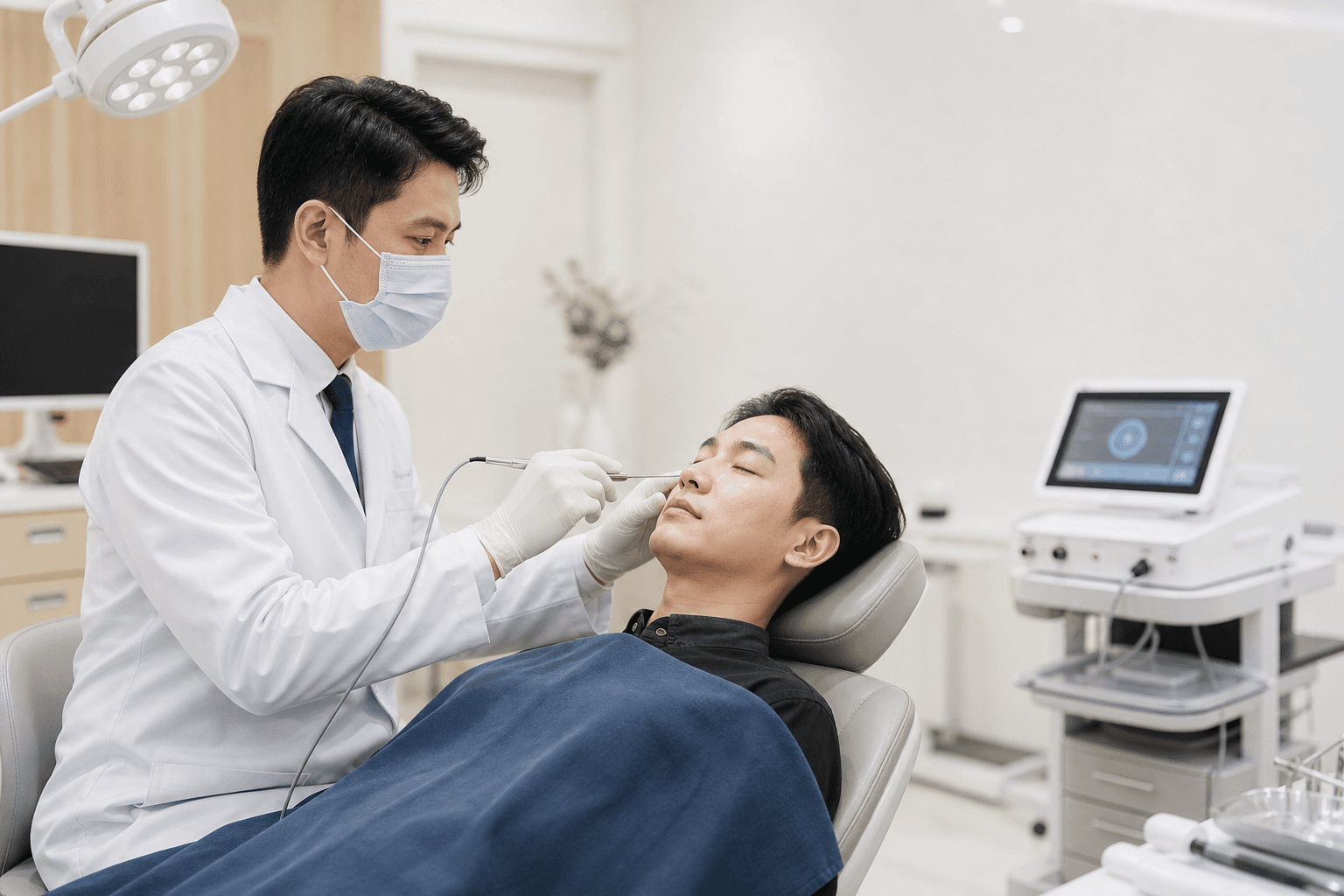
Low-temperature radiofrequency uses controlled radiofrequency energy to remodel selected soft tissues in the upper airway—such as the soft palate, uvula, or inferior turbinates—when medically indicated.
The aim is precise energy delivery with limited thermal spread to nearby tissue, supporting comfort and recovery in carefully chosen patients. Many procedures can be performed in an office or procedure-room setting.
This technology is not appropriate for every symptom or severity level. An ENT specialist evaluates anatomy, symptoms, and alternatives before recommending treatment.
Why this technology
We use it to support precision and indication-based care—not as a replacement for every treatment pathway.
Controlled energy directed to planned treatment targets.
Designed to limit unnecessary heat spread when used appropriately.
Clinic-grade radiofrequency systems, including Sutter® equipment.
Many selected procedures can be performed as outpatient care.
Patient selection and treatment by an otolaryngologist.
Plans matched to anatomy, symptoms, and patient goals.
Conditions
Treatment depends on examination findings. Not every condition below requires radiofrequency.
Snoring related to soft-palate or uvular vibration in selected patients.
Considered only when appropriate—not a universal OSA solution.
Enlarged inferior turbinates contributing to chronic congestion.
When turbinate tissue is a contributing factor and RF is indicated.
Soft-palate vibration or laxity that may contribute to snoring.
An elongated or enlarged uvula that may relate to snoring sounds.
Procedures
Each procedure has different indications, possible benefits, and recovery expectations. Results are not guaranteed to be identical for every patient.
Comparison
This overview is educational. It does not imply radiofrequency is better for every patient or every condition.
Some conditions still require surgery or CPAP. Treatment choice depends on individualized ENT assessment.
Candidates
An ENT specialist evaluation is always required. Do not self-select treatment.
Especially when soft palate or uvula anatomy may contribute.
Not a primary substitute for CPAP in all moderate-to-severe OSA cases.
Chronic congestion from turbinate hypertrophy when RF is indicated.
When examination links vibration patterns to snoring symptoms.
Journey
Diagnosis first, then indication-based treatment and follow-up.
Review symptoms, sleep history, and prior treatments.
Assess nasal, pharyngeal, and upper-airway structures.
Evaluate narrow or vibrating segments when indicated.
Clarify contributing causes and severity.
Compare options including medication, CPAP, RF, or surgery.
Performed for carefully selected patients according to plan.
Follow aftercare guidance for comfort and healing.
Review outcomes and any need for additional care.
Technology spotlight
RAJVITHI ENT CLINIC uses clinic-grade radiofrequency systems, including Sutter® German-engineered platforms, to support controlled energy delivery for selected ENT procedures.
Technology is only a tool. Outcomes depend primarily on patient selection, anatomical assessment, clinical judgment, and specialist follow-up.
A radiofrequency platform used in modern ENT practice.
Designed for precise, controlled energy use in clinical settings.
Supports targeted treatment when indications are met.
Combined with endoscopy and specialist clinical assessment.
FAQ
Educational information only—not individualized medical advice.
Many procedures use local anesthesia. You may feel warmth, pressure, or mild irritation. Discomfort varies by person and procedure.
Early irritation or congestion may last days to a few weeks depending on the procedure and individual healing.
Most office-based procedures allow same-day discharge when the physician confirms it is safe.
People with medical contraindications, conditions needing other first-line care, or unsuitable anatomy. Your ENT specialist decides.
Coverage depends on your policy and insurer. Check benefits before treatment.
Some patients need one session; others may need further care based on response. There is no fixed number for everyone.
They are different technologies. Choice depends on the target tissue, goals, and clinical judgment.
Immediate or identical long-term results are not guaranteed. Outcomes depend on cause and anatomy.
No—not for every OSA patient, especially moderate-to-severe disease where CPAP remains important.
Often yes. Endoscopy or additional tests help plan safer, more targeted care.
RF focuses on targeted remodeling. Scar risk depends on procedure type and individual factors.
In some cases, repeat or adjusted care may be considered if still indicated and safe.
It depends on your history and medicines. Follow personalized clinic instructions.
Only when age, symptoms, and indications support it after specialist assessment—not a one-size approach.
A radiofrequency technology platform used in ENT care. Use depends on the planned procedure and clinical evaluation.
Related links
Related clinic pages to help you explore conditions, services, and procedures.
Educational information
This information is intended for educational purposes only and does not replace diagnosis or treatment by a qualified physician. If you have concerning symptoms, please consult an ENT specialist.
Book your consultation with an ENT specialist to learn whether low-temperature radiofrequency is appropriate for you.